LAB-001 · equipment
Why We Listen on the Water Hole (and What's Actually in the Signal Chain)
Dee Okafor ·
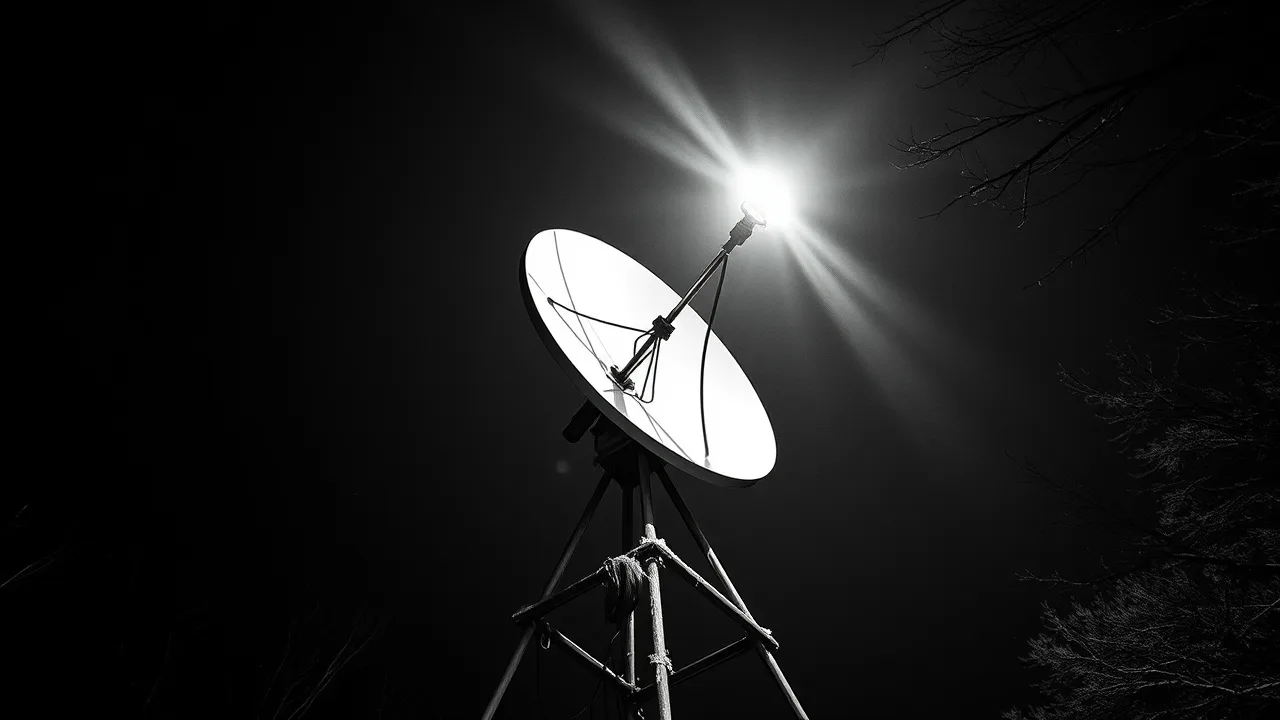
We get asked a version of this question every time someone new finds the site: why this frequency, and why should anyone believe a garage setup can pick up something a real observatory would have found first. Fair questions. Here’s the honest answer to the first one, and as much of an answer to the second as we can give without pretending to a confidence we don’t have.
The water hole. The band between the hydrogen line (1420.4 MHz) and the hydroxyl line (1662 MHz) has been called the “water hole” since Bernard Oliver coined the term decades ago — it’s the quiet stretch between two natural spectral markers any technical civilization doing radio astronomy would likely also know about, which is exactly why SETI programs have leaned on it as a plausible place to listen. We didn’t invent this idea. We just built hardware cheap enough to actually point at it ourselves instead of waiting for someone else to.
What’s in the chain, in order: a repurposed prime-focus dish (ours came off a defunct backyard C-band install, not anything special — this class of hardware is a local-pickup/classifieds find, not something we can responsibly link to a specific SKU; freight on a multi-meter dish is brutal, so buy local if you’re going this route), a cooled low-noise amplifier at the feed tuned to the hydrogen line, low-loss coax running the signal down to the receiver — this stage matters more than people expect; a good dish behind bad coax loses to a mediocre dish behind good coax — and a software-defined radio digitizing everything for processing. None of this is exotic. All of it is available to anyone with a weekend and a few hundred dollars, which is the point.
On the “why hasn’t a real observatory found this” question. We don’t have a satisfying answer, and we’re not going to invent one. What we can say: our receive chain is aimed at a specific, narrow slice of a band that gets comparatively little dedicated dish-time from major facilities chasing other targets, we’ve been listening continuously for longer than most funded programs get for any single target, and we got lucky. That’s genuinely it. We’re aware of how that sounds. We published the receive-chain specifics above so anyone with the hardware and the patience can point at the same coordinates and check our work — that offer is not rhetorical.
Sixmile Run’s budget for the next receiver upgrade is, as of this writing, not fully funded — our current equipment picks are linked throughout this piece and elsewhere on the site; if you were going to buy any of this gear anyway, buying it through those links is the most direct way to help without us having to ask directly for money, which we’d rather not do more than once per piece.